Installed clean · insurer-preferred
Tool Drawers
& Storage
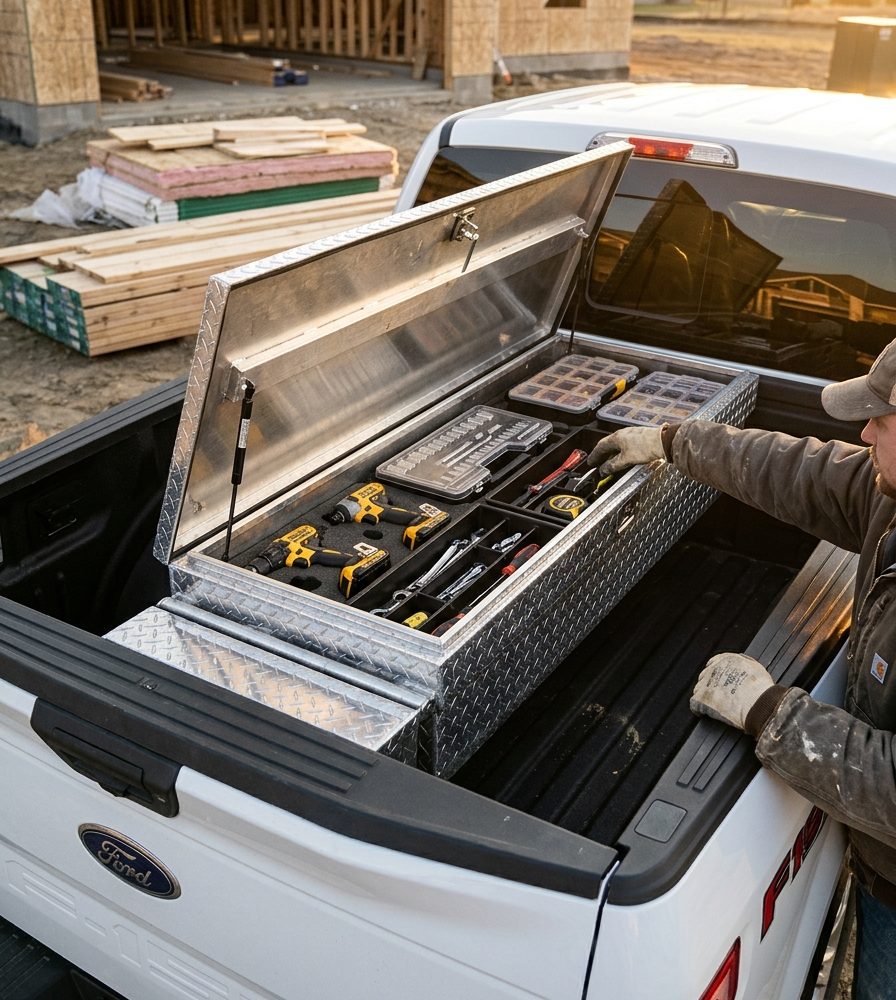
A truck tool box keeps your most-used tools locked, dry and within reach of the tailgate. We install crossover and drawer-style boxes in aluminum, steel or high-impact polymer, matched to your truck and the way you load the bed. Secure Storage. Built for the Bed. Pair your tool box with Rhino Liner, a tonneau cover or side steps for a pickup that’s ready for the job.
Not Sure Which Truck Tool Box Fits Your Needs?
Talk to One of Our Specialists
Vehicles Tool Drawers & Storage
NMT Auto Service helps Oakville contractors, tradespeople, and fleet operators think through how tool boxes, drawers, existing accessories, and usable cargo space fit the work their vehicles perform. NMT offers fleet maintenance and upfitting, aftermarket accessories, truck accessories, and professional Rhino Liner installation that can support the vehicle around its current storage setup.
A practical setup starts with the tools you carry most often. Daily-use equipment should be easier to identify and reach, while specialty tools can stay in a secondary position, and open bed or cargo space can remain available for materials that change from job to job.
Common Projects
- Shelving and drawer repairs
- Ladder and pipe rack re-mounting
- Inverter and wiring faults
- Partition and bulkhead replacement
- Seasonal equipment swaps
- Spray in Liners, Interior & Exterior Lighting
Financing
Single-Vehicle Financing, on Approved Credit. Spread Your Upfit Over the Life of the Truck
——— Let's Talk
Ready to Build?
Let's Talk
Tell us about the job and a builder will get back to you within one business day. Prefer to talk it through? Call us direct.
(905) 845-0770670 Fourth Line, Oakville, ON · Quotes within 1 business day
Request a Consult
Tell Us About the Build
About NMT Outfitters
Which Truck Toolboxes Fit the Work You Do Every Day?
The most useful tool boxes are the ones that match what you actually carry and how often you reach for it. Start by separating daily-use tools from specialty, backup, and job-specific equipment, then look at what space must stay available for materials or other work gear.
Call 905-845-0770 for more information.
Put Daily-Use Tools First
Start with the tools that support most jobs:
- Tools used at nearly every stop
- Specialty equipment used for specific tasks
- Backup equipment
- Small parts and consumables
- Equipment that no longer needs to stay in the vehicle
- Larger items that require open cargo or bed space
Tools that come out repeatedly should have a predictable place. Equipment used less often can stay farther from the main access area so it does not compete with daily-use items.
Keep Useful Space Available
Do not assume every open area needs permanent storage. A pickup or work vehicle may need room for materials, temporary equipment, or larger items that change between jobs.
Before adding or moving tool boxes, note what already works well. Existing accessories, protective surfaces, and open areas can remain part of the setup when they continue to support the job.
What Should a Truck Tool Box Leave Accessible?
A truck tool box should support tool access without taking away more pickup-bed space than the work requires. Across the main styles of truck toolboxes, traditional boxes (also called crossover toolboxes)usually reduce available bed length, while drawer-style options can be a better variety when you need more organized storage. Drawer-style units also allow easier access from the tailgate. Consider what stays in the truck every day, what materials also need room, which accessories are already installed, and which parts of the bed need to remain usable.
Start with the Way You Use the Truck Bed
Ask:
- Which tools stay in the pickup every day?
- Which materials or equipment also use the bed?
- How often do larger items need to be carried?
- Which accessories are already on the vehicle?
- Which areas need to remain open?
When considering a truck tool box, note those details before discussing related truck accessories or fleet upfitting with NMT, since proper fit can depend on bed width, factory mounting points, and other truck-specific features, including the right size. Some models need adjustments for proper fit before installation is finalized.
Include Existing Pickup Truck Accessories
NMT offers truck accessories such as tonneau covers, lift and levelling kits, lighting, wheels and tires, side steps, running boards, and Rhino Liner.
Existing equipment matters because it is already part of the work vehicle. Keep useful accessories in the plan and describe any changes you are considering before deciding what else should be added.
How Should a Truck Bed Tool Box Work with Usable Bed Space?
A truck bed tool box should leave enough room for the materials and equipment your pickup still needs to carry. Look at what stays in the bed permanently, what changes between jobs, what protection is already in place, and which areas need to remain open for normal work.
Keep Space for Changing Loads
Review:
- Tools that stay in the truck
- Materials carried regularly
- Temporary equipment
- Areas that need to remain open
- Existing bed protection
- Changes in how the truck is used
A truck bed tool box should support the current job without turning every part of the bed into permanent storage. If the truck’s role changes, review whether the existing arrangement still makes sense.
Protect the Bed Where Work Creates Wear
NMT Auto Service provides professional Rhino Liner installation in Oakville. NMT describes Rhino Liner as a spray-on polyurethane coating designed to protect truck beds and other surfaces from damage, corrosion, and wear.
For a pickup that regularly carries tools or materials, bed protection can be considered separately from storage so each decision responds to a specific need.
How Should Tool Drawers Change When Your Work Changes?
When the work changes, review the tools and storage already in the vehicle before adding more. Equipment from an older contract or previous role may no longer need priority, while newer tools may need easier access. The goal is to make the current setup reflect today’s work.
Remove What No Longer Supports the Job
Look for:
- Tools that are rarely used
- Duplicate equipment
- Old job-specific items
- Supplies that no longer support current work
- Accessories that are no longer useful
- New equipment that needs easier access
Removing unnecessary equipment can free space for the tools and materials that now matter more.
Reorganize Around Current Tasks
Put frequent-use tools in the most convenient locations and keep occasional-use equipment secondary. Preserve open space where the vehicle needs to carry changing materials or larger equipment.
If the current storage still suits the work, keep it. Changes should respond to a real access, organization, protection, or vehicle-use need.
How Can Tool Storage Support Commercial Fleet Vehicles?
For fleets, tool organization should reflect the job assigned to each vehicle. Similar work vehicles can share common priorities, while different roles may require different tools, accessories, and amounts of open space. NMT offers fleet maintenance and upfitting plus aftermarket accessories for commercial customers.
Compare the Same Details Across Vehicles
For each unit, record:
- Year, make, and model
- Primary business role
- Tools carried regularly
- Specialty equipment
- Current storage and organization
- Existing accessories
- Current vehicle protection
- Areas that need to remain open
- Desired changes
This makes it easier to identify where similar vehicles have shared needs and where one vehicle should stay different because of the work it performs.
Keep Common Priorities Where They Help
Vehicles doing similar work may benefit from keeping regularly used equipment easy to identify and reach. Vehicle owners and fleet operators may choose among aluminum, steel, and plastic toolboxes depending on the role of each vehicle. Most metal toolboxes are made from aluminum because it is lightweight and supports long-term durability. Plastic or high-impact polymer options resist weathering well, though polymer styles are less common than metal ones. Vehicles with different responsibilities can keep different arrangements instead of forcing every unit into the same setup.
NMT’s fleet maintenance and upfitting services also include tire and rim work, custom alignments, custom suspension work, undercoating, tire and wheel diagnostics, and aftermarket accessories.
What Information Should You Bring to NMT?
Bring enough information to show how the vehicle works today. Include existing accessories so any relevant truck-accessory, Rhino Liner, automotive, or fleet service discussion starts from the current setup.
Bring:
- Vehicle year, make, and model
- Primary business use
- Tools normally carried
- Tools used most frequently
- Existing storage or organization
- Existing truck accessories
- How the pickup bed or cargo area is used
- Areas that need to stay open
- Current bed or vehicle protection
- Desired changes
Call 905-845-0770 for more information.
Frequently Asked Questions
How Should I Decide Which Tools Stay in My Work Vehicle?
Keep the tools you use most often easier to identify and reach. Move specialty or backup equipment to secondary locations, and remove items that no longer support the work you currently perform.
What Should I Consider Before Choosing a Truck Tool Box?
Before choosing a truck tool box, consider the tools you carry daily, the bed space needed for materials, existing vehicle accessories, and any areas that must remain open. Choice also depends on truck toolboxes styles, overall size, and whether you need tailgate access or more open bed length. The setup should reflect how the pickup is used now rather than filling available space without a clear reason.
What Should a Truck Bed Tool Box Leave Room For?
A truck bed tool box should leave room for the materials, temporary equipment, and open bed space your work requires. Also consider existing protection and accessories so the storage arrangement reflects the pickup’s current use.
Can NMT Support the Vehicle Around a Tool-Storage Setup?
NMT offers fleet maintenance and upfitting, aftermarket accessories, truck accessories, and professional Rhino Liner installation. These services can support relevant vehicle, accessory, and bed-protection needs around a commercial or work-vehicle setup. For vehicle details or to discuss service options, contact NMT through the contact page.
What Information Should I Provide Before Discussing Tool Boxes?
Before discussing tool boxes, bring the vehicle year, make, and model, the tools you carry, existing storage and accessories, how the bed or cargo area is used, current vehicle protection, and the changes you want to make.
Keep Everyday Tools Ready Without Giving Up Useful Space
Good tool storage should support the work you perform now. Keep frequently used equipment easier to reach, leave room for changing materials, and account for the accessories and protection already on the vehicle.
To discuss tool boxes and related vehicle needs i or contact NMT Auto Service with your current setup and the changes you want to make
Service by Location
Etobicoke
Hamilton
Mississauga
Oakville
Service by Trade
Mechanical Trades
Construction & Site
Grounds & Seasonal
Service & Specialty
Delivery & Logistics
Public & Emergency