01
Storage & Shelving
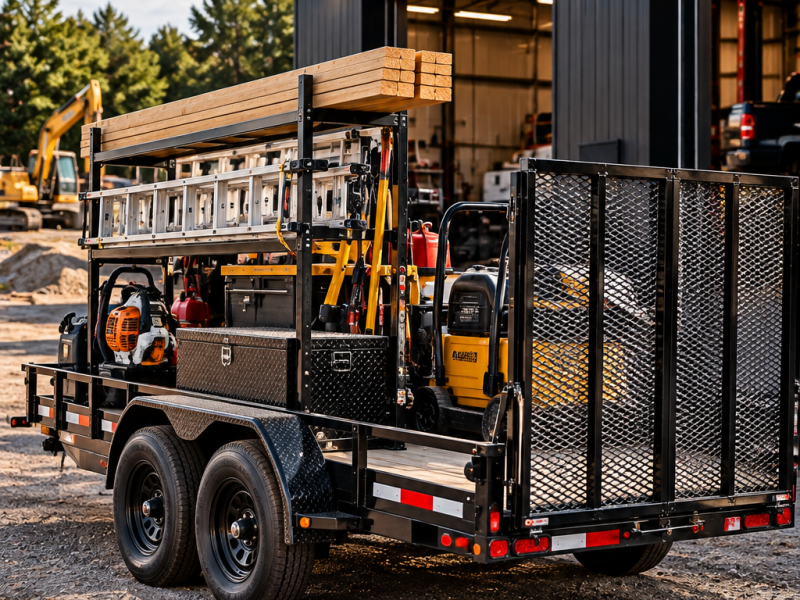
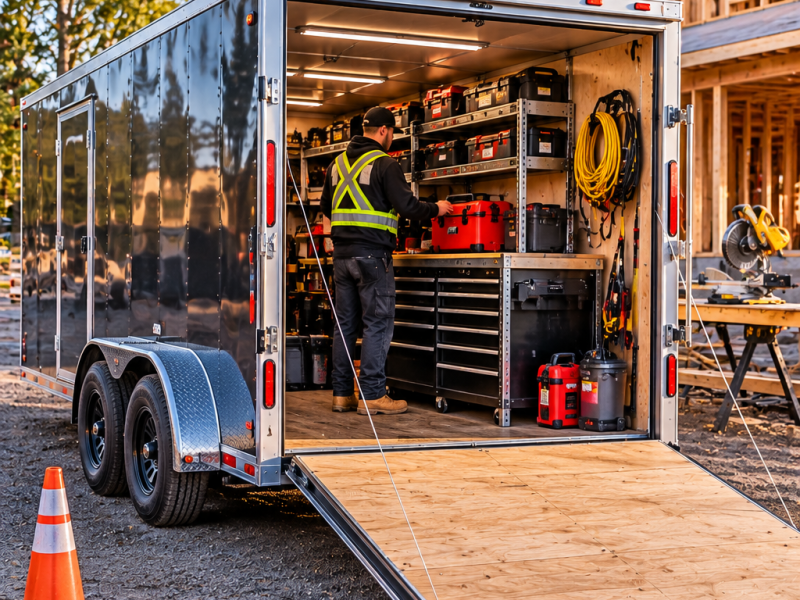
Modular aluminium shelving and sealed drawer banks rated for load and vibration.
- Load-rated aluminium shelving
- Sealed drawer banks
- Bin and parts walls
TRAILER UPFITTING · BUILT FOR THE JOB
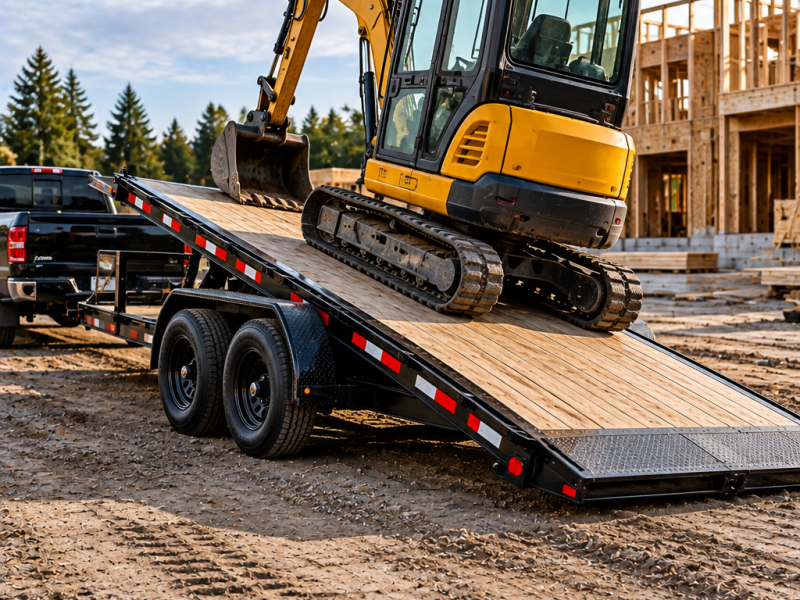
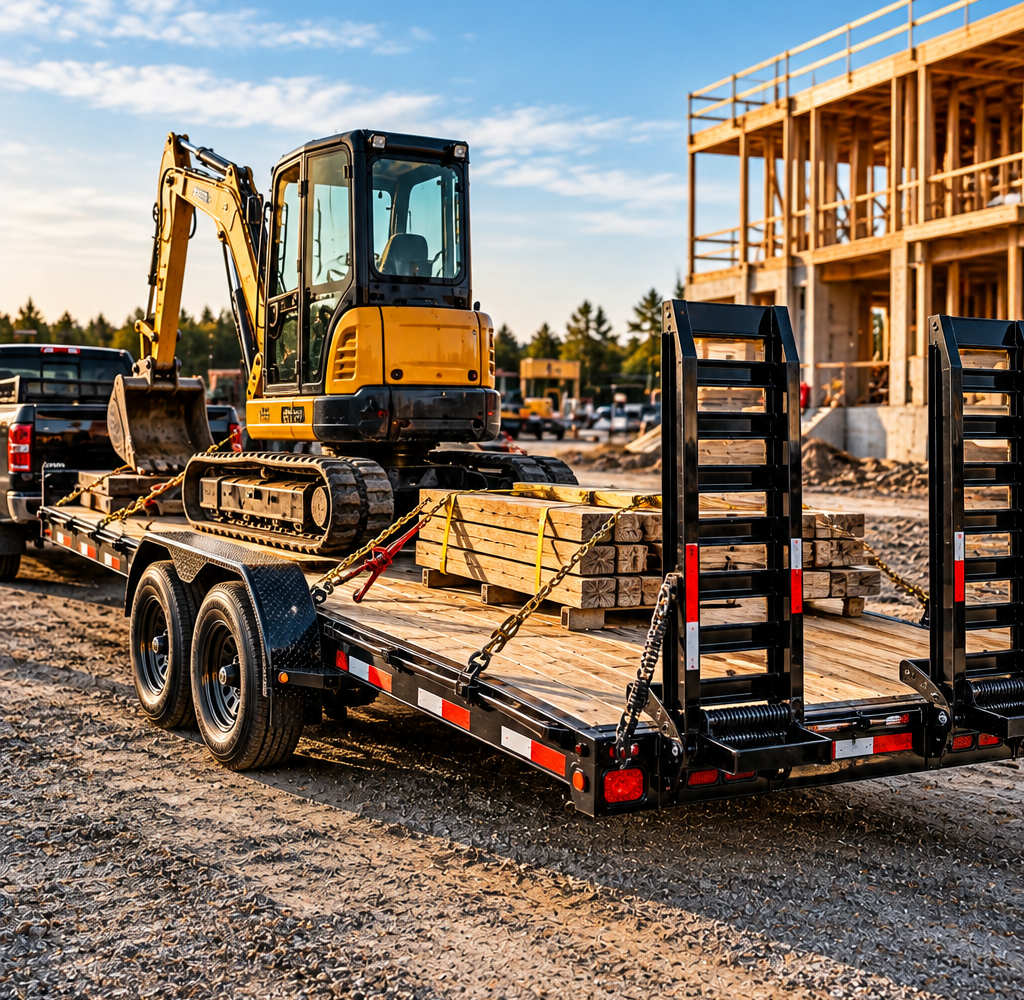
When the job calls for moving oversized materials, heavy machinery, or bulky equipment, your trailer needs to be up to the task. At NMT Outfitting, we focus on making flat deck trailers more versatile, dependable, and easier to load and secure. From construction sites to equipment yards, we help you get the most out of every haul.
What we install
01
Modular aluminium shelving and sealed drawer banks rated for load and vibration.
02
Steel, mesh and composite bulkheads, fitted to your cab profile and sized to the load you carry.
03
Inverters, secondary batteries, interior LED runs and exterior work lighting.
04
Ladder and pipe racks, roof access, plus decals and full graphics applied in-house.
Financing
Straight answers
Yes. We can assess suitable winch and mounting options to assist with loading vehicles, machinery, and other equipment. The installation must account for pulling capacity, mounting strength, and electrical requirements.
We can assess the installation of D-rings, anchor points, and other cargo securement systems to help keep machinery, vehicles, and materials properly restrained during transport.
We can assess worn, cracked, or damaged decking and recommend appropriate repair or replacement options based on the trailer's construction and intended loads.
Yes! We can assess braking concerns and recommend suitable repairs or replacement components based on your trailer's braking system and specifications.
Yes, we can inspect concerns involving axles, hubs, bearings, and related components to determine the appropriate service requirements.
Not the right fit? Try a sibling
——— Let's Talk
Tell us about the job and a builder will get back to you within one business day. Prefer to talk it through? Call us direct.
(905) 845-0770670 Fourth Line, Oakville, ON · Quotes within 1 business day
Request a Consult
About NMT Outfitters
NMT Auto Service in Oakville upfits flat deck trailers around the cargo customers actually carry and the deck space they still need to use. For customers comparing flat deck trailers outfitters, NMT focuses the discussion on load footprint, access, existing equipment, changing work requirements, and fleet use rather than starting with a generic parts list. That makes the current use of the platform the starting point for every decision. A practical flat deck trailers outfitting plan should preserve the open platform while addressing the recurring problems that make loading, access, or day-to-day use harder.
A useful flat deck trailers upfitting plan starts by understanding how the deck is occupied during normal work. Instead of assuming that every open area is available for permanent additions, identify what typically sits on the platform, which loads change, and which parts of the deck must remain clear for future use.
Start by documenting:
This gives the upfit a clear starting point without relying on manufacturer specifications or assumptions about how every flat deck trailer is used.
List what normally travels on the trailer and then separate it from cargo that appears only occasionally. Regular loads reveal the areas that support the same routine every day. Occasional loads show where flexibility matters more than a permanent installation.
This distinction helps you avoid dedicating useful platform space to a need that only appears rarely. It also gives trailer upfitters a more accurate picture of which requirements are recurring and which should remain adaptable.
Think about the deck in working areas rather than individual hardware locations:
The goal is not to create a technical load plan. It is to understand which parts of the platform are essential to the way the trailer is used before anything new is added.
The purpose of flat deck trailers outfitting should be to support the trailer’s work without unnecessarily reducing the open space that makes the platform versatile. Before making a permanent change, identify whether the need appears on most jobs, whether the addition could interfere with changing loads, and whether the same result could be achieved while keeping more deck area available.
Ask:
Permanent changes make the most sense when they address recurring needs. Focus on the function first:
Avoid choosing an addition simply because there is room for it. If the function is rarely needed, preserving open deck space may be more useful than making that area permanent.
A trailer used for changing materials or equipment may need more flexibility than one that performs the same job every day. Identify the areas most affected by changing cargo and keep those sections as adaptable as the work requires.
This is especially useful for contractors, trades professionals, businesses, and fleet operators whose trailer roles may shift. The outfitting plan should support the work the trailer performs without assuming that today’s load will always be tomorrow’s load.
When comparing flat deck trailers upfitters, explain how cargo is loaded, where it normally sits, and what needs to remain accessible while the trailer is in use. Access problems often become obvious only after the platform is occupied, so the planning process should follow a real work routine rather than an empty-deck diagram.
Ask:
Use a simple sequence:
At each stage, note where the current setup creates friction. Look for areas that become blocked, equipment that becomes difficult to reach, or permanent additions that reduce the useful loading area.
This exercise helps turn general frustration into a clear upfit priority without assuming that a particular piece of hardware is the answer.
Common issues to document include:
Repeated problems deserve more attention than one-off inconveniences. That keeps the outfit focused on practical use.
Each flat deck trailers upfitting decision should solve a defined problem. NMT Auto Service provides fleet maintenance and upfitting along with aftermarket accessories, so customers can bring the trailer’s current configuration and intended use into the discussion instead of selecting additions without a clear purpose.
Organize the needs around:
Learn more about NMT’s fleet maintenance and upfitting when planning broader commercial requirements.
Before selecting an accessory or other change, identify:
This keeps the project centred on the result rather than the number of additions.
Document the current setup before changing it:
A good upfit does not require replacing parts of the current setup that already support the trailer’s role. Reviewing those conditions first also keeps flat deck trailers upfitting centred on actual limitations rather than assumptions.
Flat deck trailers upfitting should be able to respond when cargo, equipment, or business requirements change. Review the existing setup before adding more, then separate long-term needs from temporary ones. This keeps the platform focused on the trailer’s current job while preserving room for requirements that may evolve.
Consider:
Review whether the current layout still supports:
Keep what continues to serve those functions. The goal is to address actual shortcomings, not to rebuild a trailer simply because its role has changed.
Look for:
These issues create a clearer basis for an outfitting or upfitting discussion.
Flat deck trailers outfitters should start with the role of each trailer before identifying shared requirements. NMT Auto Service provides fleet maintenance and upfitting and lists aftermarket accessories among its Fleet/Wholesale capabilities, giving businesses a relevant place to discuss broader commercial vehicle needs.
A single trailer can be planned closely around its normal work. For flat deck trailers outfitting, document:
Keep the project focused on the needs that appear repeatedly rather than creating a broad package of unverified accessories.
For each unit, record:
Then separate shared requirements from needs that apply only to one trailer. This gives trailer upfitters useful context without assuming that every unit should be configured identically.
A clear build brief makes flat deck trailers outfitting more specific by showing how the trailer is used today and what needs to change. It also gives flat deck trailer upfitters the context to discuss existing equipment, open deck requirements, and broader accessory or fleet needs without relying on assumptions. For businesses comparing flat deck trailers upfitters, the same brief creates a consistent starting point for discussing each trailer.
Bring:
Contact NMT Auto Service in Oakville with this information to discuss the trailer’s outfitting needs.
Bring the trailer’s year, make, and model where known, along with its current configuration, typical cargo, existing equipment, areas that need to remain open, and the problem you want to solve. Photos can also help show the current setup and the parts of the deck affected by regular use.
Start with the needs that affect normal trailer use most often. Review the cargo footprint, usable deck area, access requirements, existing equipment, and the amount of flexibility needed for changing loads. Prioritize recurring limitations before considering additions that solve only occasional problems.
Separate permanent requirements from variable-load areas. Keep additions focused on functions needed regularly, while preserving deck space used by cargo that changes between jobs. Review the setup again when the trailer’s role changes so previous additions do not unnecessarily restrict its new use.
Yes. NMT Auto Service provides fleet maintenance and upfitting and lists aftermarket accessories through its Fleet/Wholesale operation. Document each trailer’s role, existing setup, cargo, and planned changes before identifying requirements that may be shared across multiple units.
NMT Auto Service is located in Oakville and provides broader fleet maintenance, upfitting, and aftermarket-accessory capabilities. Customers looking for flat deck trailers outfitters can bring the trailer’s current setup, cargo requirements, and intended changes to NMT so the discussion starts with how the platform is actually used.
The best trailer plan starts with the load footprint, the deck space that needs to remain useful, and the recurring problems that affect everyday work. Flat deck trailers upfitters can use that information to keep additions focused on real requirements instead of filling available space without a purpose. NMT Auto Service in Oakville can help connect those needs with a practical upfitting discussion for individual or fleet use. Contact NMT or call 905-845-0770 to discuss the trailer and the work it needs to support.
Etobicoke
Hamilton
Mississauga
Oakville
Mechanical Trades
Construction & Site
Grounds & Seasonal
Service & Specialty
Delivery & Logistics
Public & Emergency